

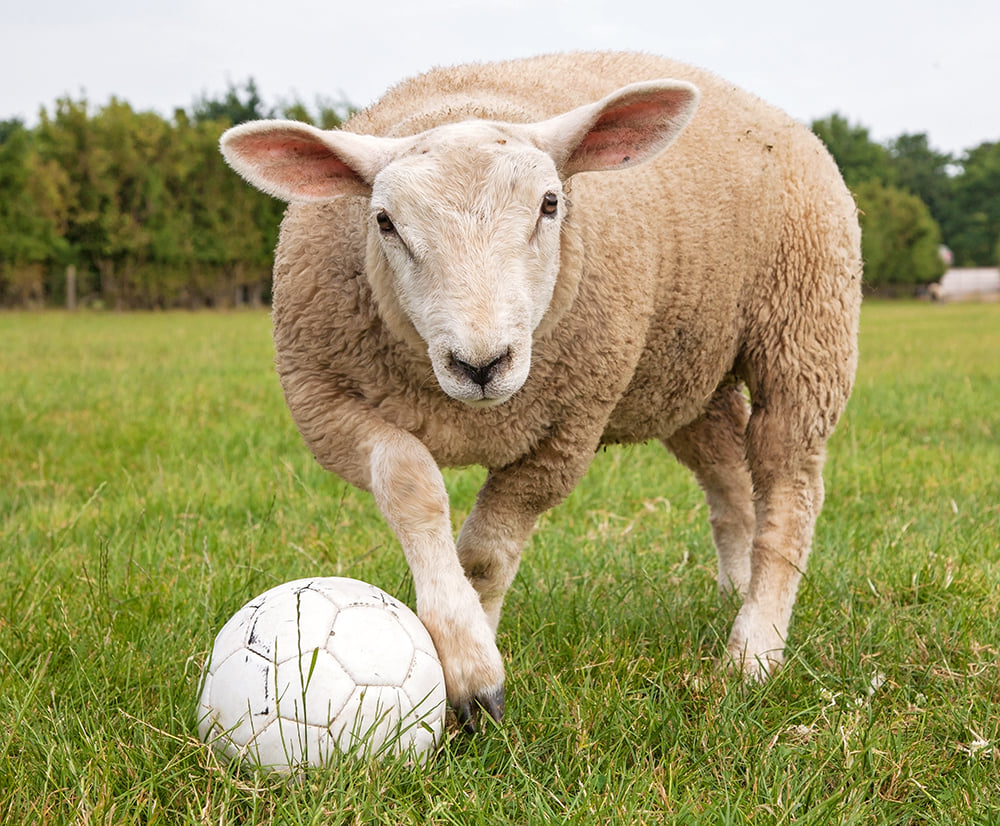
Across communities all over the country this time of year, the fields are full. Early morning practices. Late-night games. Weekends spent moving from field to field with folding chairs and water bottles in hand.
Sports have a way of shaping our lives. They teach discipline, teamwork, perseverance, and leadership. Every athlete benefits from someone guiding them, someone who sees what they cannot yet see in themselves.
In sports we call that person a coach.
In Scripture, God uses a different image: a shepherd.
Long before stadium lights and scoreboards, King David wrote the words, “The Lord is my shepherd; I shall not want” (Psalm 23:1). David wasn’t speaking poetically. He knew firsthand what a shepherd does. Shepherds guide sheep to safety, protect them from danger, and search for them when they wander.
Centuries later, Jesus stood before a crowd and made a remarkable claim:
“I am the good shepherd. The good shepherd lays down his life for the sheep.” (John 10:11)
For many of us today, those words sound comforting and familiar. But for the people listening that day, they were shocking.
Throughout the Old Testament, God Himself was described as the Shepherd of Israel. When Jesus said, “I am the good shepherd,” He wasn’t simply offering a nice metaphor. He was claiming to be the very Shepherd David trusted—the One who leads, restores, and protects God’s people.
But Jesus took the image even further.
“The good shepherd lays down his life for the sheep.”
That statement would have stopped His listeners in their tracks. Shepherds protected sheep, but they didn’t die for them. Sheep were valuable, but not more valuable than the shepherd’s life.
Yet Jesus flips the picture entirely.
In the upside-down kingdom of God, the Shepherd dies for the sheep.
Jesus wasn’t speaking abstractly. He was describing the cross that was coming. Later in the same passage He explains, “No one takes it from me, but I lay it down of my own accord” (John 10:18). His death would not be an accident or a defeat, it would be a deliberate act of love.
The Shepherd would step between His sheep and the danger they could not escape.
The Bible consistently describes people as sheep for a reason. Sheep have a tendency to wander. Left on their own, they drift away from safety. In much the same way, we often follow voices that promise fulfillment, success, comfort, influence, achievement – only to discover they cannot truly lead us where our souls need to go.
Jesus offers something entirely different.
He does not simply give advice from a distance. He calls people to follow Him personally. In fact, earlier in the same chapter He says that His sheep know His voice and follow Him (John 10:4).
That’s a powerful picture. Faith is not merely about participating in religion or aligning with an institution. It begins with hearing and trusting the voice of the Shepherd who knows us by name.
And this Shepherd is unlike any other leader we will ever encounter. He doesn’t use His followers for His own advancement. He gives Himself for their rescue.
That’s the upside-down beauty of the gospel.
The Shepherd laid down His life so the sheep could truly live.
And even today, His voice continues to call wandering sheep home.
 Upside Down Faith