Vision and Provision!

We often assume vision is about seeing something new. A new goal. A new direction. A new future. But in Scripture, vision usually comes after faithfulness—not before it.

In Exodus 25–30, God gives Moses a detailed vision for the tabernacle. It’s not vague or inspirational; it’s specific, measured, and intentional. Every material, every dimension, every function is carefully laid out. But what’s striking isn’t just the detail—it’s the order. God reveals the vision long before He identifies the people who will build it.

That moment comes in Exodus 31, when God names Bezalel and Oholiab and says He has already filled them with skill, wisdom, and creativity. In other words, before God ever shared the vision, He had already prepared the people. The gifts were in place. The ability was formed. The provision existed.

This pattern shows up throughout Scripture. God doesn’t scramble to meet a need once He reveals His will. He works quietly over time, shaping hearts, forming character, and building capacity long before the moment arrives. Vision doesn’t create provision. Provision precedes vision.

That truth is deeply comforting. It means our lives aren’t random collections of experiences. The skills we’ve developed, the lessons we’ve learned, the challenges we’ve faced—God can use all of it. Often, we don’t realize how prepared we are until God reveals what He’s been preparing us for.

Deuteronomy 2:7 captures this beautifully when Moses reminds God’s people that the Lord has blessed the work of their hands, has been with them, and has allowed them to lack nothing. This isn’t a denial of hardship—it’s a declaration of faithfulness. God was present in every season, even when the purpose wasn’t yet clear.

That’s why Proverbs 29:18 matters so much. Without God’s revealed truth, people drift. But when God speaks and His people listen, there is blessing and life. Vision isn’t about ambition. It’s about alignment—ordering our lives around what God has already made known.

For many of us, the invitation isn’t to chase something new. It’s to pause long enough to recognize where God has already been at work. To trust that the preparation we’ve experienced wasn’t wasted. And to respond faithfully when God invites us to take the next step.

Vision doesn’t begin with buildings or plans or strategies. It begins when God’s people say yes—yes to listening, yes to obedience, yes to trusting that He has already gone before us.

And when we respond that way, we discover what has always been true: God is faithful, His purposes are good, and He is never late.

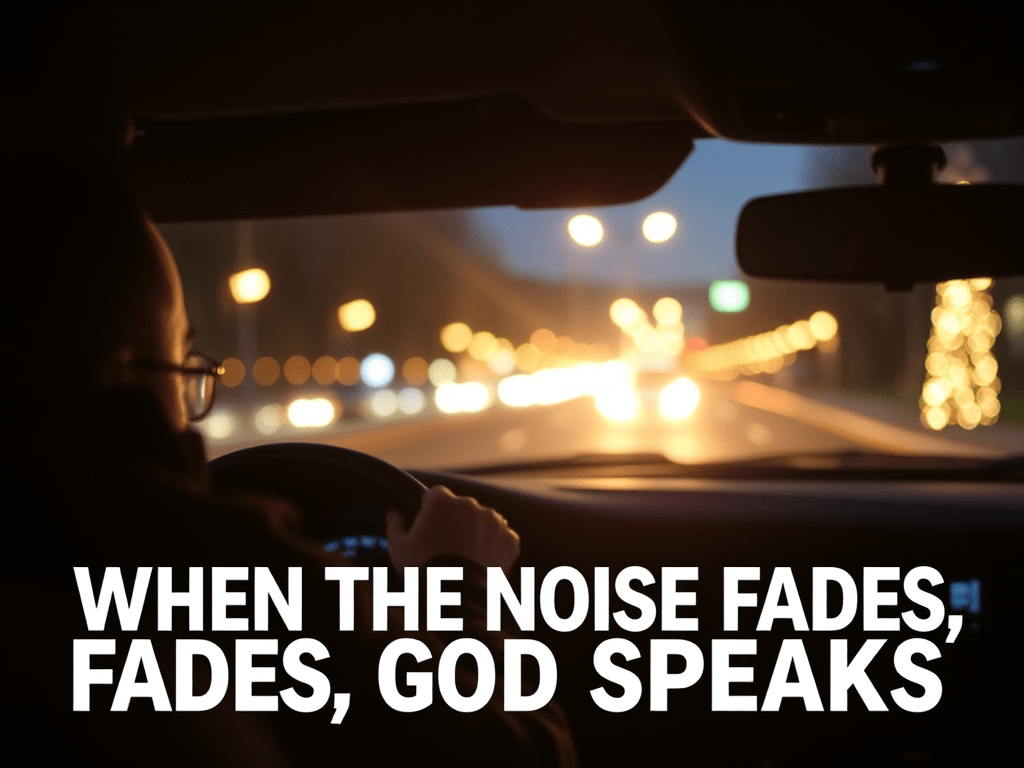
When the Noise Fades, God Speaks

Have you ever been driving in your car when the music is so loud you can’t think? You don’t turn it down because the song is bad—you turn it down because you need to hear something else. Maybe it’s a child asking a question from the back seat, directions you don’t want to miss, or a warning sound coming from the engine.

Christmas can feel the same way.

There is so much music this time of year—songs, traditions, schedules, expectations—that the most important truth of the season can get drowned out. All month long, we talk about the songs surrounding Jesus’ birth. Mary sang. Zechariah sang. The angels sang. Simeon sang. But before any of them lifted their voices, God did something even more profound.

He spoke.

That’s where the Gospel of John begins the Christmas story—not with a manger, shepherds, or angels, but with a sentence that turns the volume down: “In the beginning was the Word, and the Word was with God, and the Word was God” (John 1:1, ESV). Before there were Christmas songs, before there were Christmas trees, before the world even existed, Jesus was already there.

John’s opening words intentionally echo Genesis. Before brokenness, heartache, sin, and grief entered the story, there was Jesus. Christmas is not a detour in the Bible—it’s the restart button. It’s God stepping into a broken world with a promise of peace, purpose, love, hope, and joy.

And when God finally came, He didn’t come loudly. There were no fireworks, no palace, no parade. He came as a baby, in a small town, on a quiet night. John tells us, “He was in the world… yet the world did not know him” (John 1:10). That still feels painfully relevant. Christmas gets loud—shopping lists, busy calendars, family stress, and unmet expectations—and sometimes we miss Jesus not because He is distant, but because He comes gently.

Then John gives us one of the most beautiful and challenging lines in Scripture: “And the Word became flesh and dwelt among us” (John 1:14). When John says “flesh,” he uses the word sarx—a word that points to weakness, hunger, fatigue, and mortality. He could have said Jesus became human, but he chose a word that reminds us just how fragile humanity is. God didn’t wear humanity like a costume. He embraced it fully. Jesus knew hunger, thirst, exhaustion, and sleep. If Jesus got tired, then your exhaustion isn’t a spiritual failure—it’s human.

Jesus also entered the human timeline. He didn’t arrive fully grown. He learned to walk, speak, read Scripture, and obey. The God who holds eternity submitted Himself to process. Growth matters. Waiting isn’t wasted. Spiritual formation takes time.

John also tells us that the Word “dwelt” among us—a word that literally means “to pitch a tent.” It’s tabernacle language. In the Old Testament, if you wanted to meet with God, you went to the tent, followed the rules, brought a sacrifice, and kept your distance. But at Christmas, God does something shocking. He doesn’t wait for us to come to Him. He comes to us. The Word becomes flesh and pitches His tent in our world. God didn’t come to be visited; He came to be known.

And John reminds us that the light shines in the darkness, and the darkness has not overcome it. Just like a single candle can push back a dark room, Jesus brings light when we’re afraid, guilty, hurting, or uncertain about what’s next. Christmas Eve reminds us that the darkness didn’t stop Him then—and it can’t stop Him now.

The invitation of Christmas is simple. Receiving Jesus doesn’t mean having everything figured out. It means opening your heart and saying, “Jesus, I need You. Come close to me.” And the good news is this: He already has.

God Didn’t Send Hope—God Became Hope

Christmas is often filled with expectations. We hope the gatherings go well, the relationships feel lighter, the joy feels real, and the weight we’ve been carrying somehow eases. Ironically, the season built around hope can feel heavier than the rest of the year.

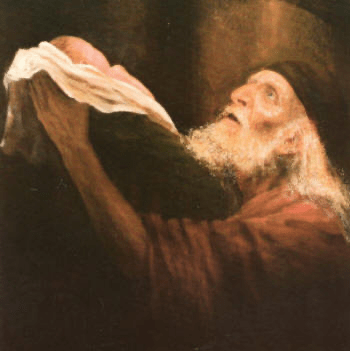
Luke 2 introduces us to Simeon, a man who understood weight—and release.

When Simeon takes the infant Jesus into his arms, his response is striking. He doesn’t celebrate loudly or ask for more time. He simply says, “Lord, now you are letting your servant depart in peace.” That word now tells the story. Something has shifted. Something has been lifted.

Simeon had been carrying the weight of expectation, longing, and promise for years. He had waited for God’s consolation, trusting that redemption would come. But in this moment, waiting gives way to peace. Hope hasn’t increased his burden—it has removed it.

This is what biblical hope does. It doesn’t pile pressure onto our lives; it releases us from carrying what we were never meant to hold alone.

Then Simeon says something even more profound: “My eyes have seen your salvation.” Salvation, for Simeon, is not an idea or a plan. It’s not a future outcome. Salvation is a person. God didn’t send hope as a message from heaven—God became hope and stepped into the world.

That distinction matters. If hope were a feeling, it would fade. If hope were an outcome, it could disappoint. But because hope is a person—Jesus—it remains steady even when life is not.

Simeon also understands the scope of this hope. Jesus is “a light for revelation to the Gentiles and for glory to Israel.” This hope crosses boundaries. It reaches outsiders. It includes people who feel forgotten, distant, or unworthy. No one is beyond its reach.

That truth reshapes how we see others—and ourselves. If Jesus is hope for all people, then no story is finished yet. No person is too far gone. No failure is final.

Christmas often tempts us to trust the season itself. We expect the decorations, traditions, and emotions to do what only Jesus can do. When the day doesn’t live up to expectations, disappointment sets in. But Christmas was never meant to carry the weight of our hope. Jesus already has.

Simeon shows us a better way. He receives what God has already prepared. He doesn’t strive. He doesn’t perform. He rests.

This Christmas, we’re invited into the same response. To stop chasing hope in outcomes. To stop striving to earn peace. To stop assuming people are beyond God’s work. And to trust the Savior—not the season.

When we do, we can leave like Simeon did—not carrying more, but carrying peace.

Because hope has come near.

And His name is Jesus.

When the Sunrise Breaks the Silence

Something strange happens to us at Christmas.

People who haven’t sung out loud since eighth-grade choir suddenly turn into soloists. The tone-deaf, the rhythmically challenged, even the ones who sound like a startled goat—everyone is humming, belting, or mumbling their way through “O Holy Night” in the grocery store produce aisle.

Why?
Because Christmas does something in us.
It makes us want to sing—even if we probably shouldn’t.

But the very first Christmas songs weren’t written by Charles Wesley or Mariah Carey. They began with two pregnant women, an unborn baby who jumped for joy, and an old priest who couldn’t talk for nine months.

His name was Zechariah.

Zechariah was a priest, faithful and blameless, who had prayed for a child with his wife Elizabeth for years. One day, his division is chosen by lot to serve in the temple—a once-in-a-lifetime honor. While he’s inside burning incense, just him and God, the angel Gabriel appears and announces that they will have a son who will prepare the way for the Lord.

Zechariah does what many of us would do: he questions.
“How can I be sure? We’re old.”
It’s doubt wrapped in logic.

Gabriel’s response is firm and unforgettable: because Zechariah didn’t believe, he will be silent and unable to speak until the child is born. For nine long months, Zechariah can’t speak, can’t pronounce a blessing, can’t fully share his excitement or fear. Just quiet.

But silence, in God’s hands, is rarely empty.
It’s often where God does His deepest, quietest, most transformative work.

Seeds grow in the dark soil.
Babies grow in the quiet of the womb.
Dreams are formed in the stillness of the night.
And faith grows in the silence—when God feels distant but is actually very close.

Zechariah didn’t lose his voice as punishment. He gained a message through preparation.

When the baby is finally born, the family assumes he’ll be named after his father. But Zechariah writes on a tablet, “His name is John.” In that act of obedience, his tongue is loosed. And the first words out of his mouth are not complaint, not “Finally!” but worship.

Luke 1:67–79 records his song. In it, Zechariah praises God for remembering His promises, for keeping His covenant, and for bringing salvation. Then he uses a striking phrase to describe Jesus: “Because of our God’s merciful compassion, the dawn from on high will visit us” (CSB).

Other translations call it “the Sunrise from on high.”

Not a sunrise.
The Sunrise.

Zechariah says this Sunrise will shine on those who live in darkness and in the shadow of death and will guide our feet into the way of peace. In other words, Jesus doesn’t wait for us to climb out of the darkness. He comes to us in it—our confusion, anxiety, grief, wandering, and long silences.

Maybe this Christmas you’re not feeling very “merry and bright.” Maybe you’re sitting in your own kind of darkness—spiritual, emotional, or directional. Maybe you’ve stopped praying about certain things because it feels like nothing is changing.

The good news is that the Sunrise has already come.
Jesus steps into the valley, not just the mountaintop.
He shines His light into our thinking, our emotions, and our decisions. He brings clarity where we’re confused, hope where we’re crushed, and peace where we’re paralyzed.

Christmas isn’t ultimately about twinkling lights on houses.
It’s about the cosmic Sunrise breaking over a dark world, a dark heart, and a dark season.

The question is:
Where is the dark place in your life that needs the Sunrise?
And will you invite Jesus to shine there?

The Treasure Test: Where Your Heart Really Lives

It sounds ridiculous now, but in the 1990s grown adults were convinced little stuffed animals could make them rich. Beanie Babies—tiny, bean-filled toys—were selling for hundreds, even thousands of dollars. People lined up outside toy stores before dawn, hoarded rare editions, and even insured them as “investments.” Parents told themselves, “This will pay for my child’s college!” But when the bubble burst, those treasures turned into yard-sale leftovers worth a couple of bucks.

What felt valuable in the moment turned out to be worthless in the end.

Jesus makes the same point in Matthew 6:19–24 when He says, “Don’t store up treasures on earth.” His warning isn’t anti-saving or anti-planning; it’s about the illusion that our possessions can give us peace, security, or identity. When we treasure the wrong things, we invest in what cannot hold its value. Our hearts follow our wallets, which is why Jesus connects treasure and trust so tightly: “Where your treasure is, there your heart will be also.”

In Jesus’ day, wealth was stored in clothing, grain, and metal—items easily ruined by moths, rust, or thieves. Today, our “rust” looks like upgrades, obsolescence, and depreciation. The phone that wowed you two years ago now feels old. The house that excited you last spring suddenly needs a bigger closet. The car you couldn’t wait to drive now seems ordinary. Earthly treasure always decays faster than we expect.

Jesus then shifts from storage to sight. “The eye is the lamp of the body,” He says, pointing out that what we focus on fills us. In Jewish culture, a “good eye” meant generosity; a “bad eye” meant greed. If our attention is consumed by comparison, envy, or the constant scroll of what everyone else has, our whole inner life grows dim. But when our eyes are fixed on the kingdom—on compassion, people, and purpose—our lives are full of light.

The issue isn’t just money. It’s mastery. Jesus ends with a blunt reality check: “You cannot serve both God and money.” Mammon—wealth personified—whispers promises it can’t keep: “I’ll make you safe. I’ll make you significant. I’ll give you security.” But the more we serve it, the more it owns us. Only one Master gives freedom, joy, and peace that last.

So how do we break the illusion of control and reclaim our hearts?

First, audit your storage units. We all have them—literal ones like garages and basements, and digital or emotional ones like Amazon wish lists or closets full of unworn clothes. Ask: What am I holding onto that no longer has eternal value?

Second, write a heavenly budget. Budgets always reveal beliefs. Start your month with generosity, not leftovers. Create a “blessings” line for spontaneous giving. Think of eternity like compound interest—invest in souls, not stuff.

Third, replace “mine” with “His.” Every dollar is borrowed breath from God. Swap ownership language for stewardship language: “This is His money… His time… His resources.” When the vocabulary changes, the heart follows.

Jesus is not after your wallet; He’s after your worship. If He sat across from you at your kitchen table and said, “Show Me your treasures,” what would He find? Your receipts reveal your reality.

Here’s the Treasure Test:
If heaven never rewarded your generosity, would you still give?
If you lost everything but kept Christ, would you still call yourself rich?

The Secret Generosity That Changes Us

What motivates the way you live? That may sound like a philosophical question, but according to Jesus, it’s a deeply spiritual one. In Matthew 6:1–4, He warns His followers not just about what they do, but why they do it: “Watch out! Don’t do your good deeds publicly, to be admired by others, for you will lose the reward from your Father in heaven.” That warning strikes at one of the most subtle temptations of our time—the temptation to live for applause.

We are surrounded by a culture built on visibility, recognition, and public image. Whether it’s our careers, our families, or even our spiritual lives, there is a pull in every human heart to be seen, approved of, and admired. The danger is not that we do good things, but that we do them for the wrong audience. Jesus isn’t challenging the act of generosity. He assumes His followers will give, serve, and love. But He exposes a deeper issue: motives matter.

Modern psychology identifies two major types of motivation: extrinsic and intrinsic. Extrinsic motivation is driven by outside rewards—money, applause, status, praise. Intrinsic motivation is rooted in inner conviction, calling, joy, and alignment with personal values. Jesus speaks directly to this when He asks us to consider whether we are living for the world’s attention or for the approval of “our Father who sees in secret.”

In His day, charitable giving was often done in public settings. Offering boxes were placed in visible locations, and some people treated giving as a performance. Jesus calls them “hypocrites”—a word originally used for stage actors. The problem wasn’t that they were doing good; it was that they turned righteousness into a spotlight moment. “They have received all the reward they will ever get,” Jesus says. In other words, applause may feel good, but it doesn’t last.

Then Jesus gives a radically different vision: “When you give to someone in need, don’t let your left hand know what your right hand is doing.” The point is not secrecy for secrecy’s sake. The point is this: hidden obedience purifies the heart. When you give in secret, serve in secret, pray in secret, and love without an audience, you learn to live for God alone. You trade temporary applause for eternal reward. You stop performing and start worshiping.

So what does this mean for you and where you live? It means that the quiet, unseen things you do matter to God. Buying groceries for a struggling family without signing your name. Leaving a gift card in a mailbox. Paying a utility bill without acknowledgment. Serving at church in a way no one notices but God. These things are not small. They are the spiritual training ground where generosity stops being a show and starts becoming a lifestyle.

Secret generosity is not about hiding the gift—it’s about revealing the heart. And according to Jesus, the Father “who sees everything” will reward you. Not with trophies, titles, or social credit, but with something better: peace, joy, intimacy with God, and a life free from the exhausting pressure of impressing people.

So the question is not just “Are you doing good?” The deeper question is “Who are you doing it for?” If the answer is the crowd, the applause will fade. If the answer is your Father in heaven, the impact will last forever.

Maybe the most countercultural thing you can do this week is something completely unnoticed—except by God.

Your Battle Cry: Don’t Let the Word of God Stay Silent

In 1940, France was better equipped than Nazi Germany in nearly every way. More tanks. Better fortifications. Greater supplies. But none of it mattered—because when the battle came, they stayed silent. Their tanks sat unused, their defenses unmanned. In just six weeks, France fell.Church, we’re in a spiritual battle. And we’ve been given the most powerful weapon in the universe—not a tank or a wall, but something sharper: the Word of God. But too often, we keep it quiet. We read it in private. We highlight it. We post verses. But we don’t draw it. We don’t speak it. And just like those unused weapons in France, our silence can cost us.

The Sword You’ve Been Given

Paul says in Ephesians 6:17:

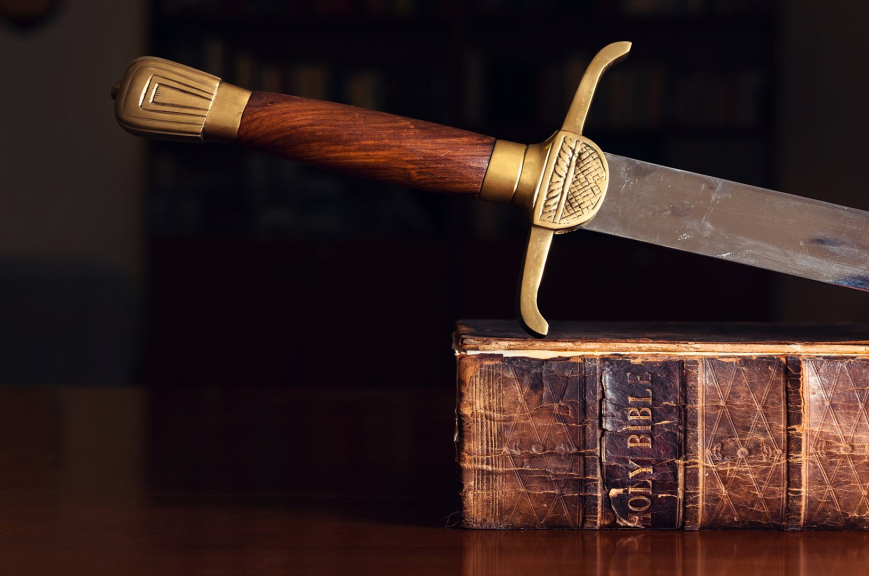
“Take the helmet of salvation and the sword of the Spirit—which is the word of God.” (CSB)

This “sword” is not symbolic fluff. It’s a real, Spirit-empowered weapon. And here’s something powerful: the word Paul uses for “word” isn’t the usual logos (which means the full message of God). It’s rhema—a spoken word. A battle cry. A moment-specific, Spirit-prompted declaration of truth. This isn’t just knowing the Bible. It’s speaking it aloud into temptation, fear, doubt, or pain.

Rhema Is Your Battle Cry

Think of Jesus in the wilderness. When Satan tempted Him, Jesus didn’t whisper positive thoughts or keep quiet. He said:

“It is written…”“It is written…”“It is written…”

Three spoken Scriptures. Three strikes with the sword. The enemy fled .Jesus wasn’t quoting verses for show—He was wielding them like a weapon. So what does this look like in your life?


1. Prayer that Speaks Scripture

Silent prayer has its place. But the early church—and Jesus Himself—prayed out loud often. Speaking Scripture in prayer is like drawing your sword in battle.

When a mom whispers Psalm 23 over her child or a couple walks through their new home, declaring Psalm 127 – the Sword is drawn. When a friend prays Psalm 34:18 over someone who’s grieving – that spoken prayer invites power into the atmosphere. When your voice aligns with God’s Word, strongholds start to shake.


2. Evangelism That Declares Hope

Sharing Jesus isn’t just about living kindly—it’s about speaking boldly.

“Faith comes from hearing, and hearing through the word (rhema) of Christ.” – Romans 10:17

When you speak Scripture to someone in need—whether it’s a coworker, neighbor, or friend—you’re placing the sword gently into their hands. You’re giving them something eternal. Even a single verse, spoken with love, can pierce the darkness and shine light.


3. Truth That Fights Temptation

Silence lets temptation fester. But a spoken verse strikes back.

When lust whispers, you proclaim: “I have hidden Your word in my heart that I might not sin against You.” – Psalm 119:11. When fear grips you, you say: “God has not given me a spirit of fear, but of power…” – 2 Timothy 1:7. When discouragement hits, you announce: “He who began a good work in you will carry it to completion…” – Philippians 1:6.

You don’t need to outwit temptation—you need to speak against it.


4. Hope That Speaks Into Pain

Some of the fiercest battles happen in heartbreak. And sometimes, people can’t even pray. That’s when your words—God’s words—can lift them. When you speak Psalm 34:18 over someone who’s grieving, it’s not cheesy—it’s warfare. God’s Word is a sword for comfort as much as one for combat.

“I am the resurrection and the life…” – Jesus to Martha in John 11

In moments of deep loss, Jesus spoke hope. So should we.


5. Worship That Declares Victory

“Let the word of Christ dwell in you richly… singing psalms and hymns…” – Colossians 3:16

Worship isn’t filler. It’s warfare. Before Jesus went to the cross, He sang a hymn (Matthew 26:30). Before battles in the Old Testament, worship leaders led the charge (2 Chronicles 20). When you sing truth, you swing your sword in the Spirit.

Whether in church or in your car, let your voice become your battle cry! 


Don’t Let Your Sword Rust

Imagine a soldier returning from war, hanging his sword on the wall. Years later, when danger comes, he reaches for it—only to find it rusted and dull. That’s what happens when we admire the Bible but never use it.

You can’t fight a spiritual battle with a Bible you never open or a verse you never speak.

Don’t let your sword gather dust.

Don’t keep your faith silent. Don’t internalize your battles. Let the Word of God become your battle cry. 

The Word of God is not just ink on a page; it’s the voice of God in your mouth.

Draw it. Speak it. Declare it. 

The Mirror of the Cross

We begin each day by looking in the mirror. It’s one of the first things we do—brushing our teeth, fixing our hair, applying makeup, adjusting our clothes. And just before we leave the house, we give ourselves one last look to make sure everything is in place. Even throughout the day, we catch our reflection in car mirrors, glass doors, and passing windows. Whether consciously or not, we are always checking—always looking.

Why is that? Because a mirror reflects what’s in front of it. It shows us if something’s off, out of place, or in need of attention. We rely on it to correct our appearance before facing the world. But what if there’s something deeper we need to examine—something a mirror cannot show?

The Gospel of Matthew, chapter 27, gives us a different kind of mirror. It’s not glass or metal, and it doesn’t reflect our face—it reflects our soul. This chapter doesn’t simply tell the story of Jesus’ suffering and crucifixion; it invites us to step into it. It asks us to slow down, to observe carefully, and to ask ourselves the uncomfortable question: What does the cross reveal about me?

The chapter opens with Judas, one of Jesus’ closest followers, who returns the thirty pieces of silver he received for betraying his Lord. Stricken with guilt, he confesses, “I have sinned.” But instead of returning to Jesus, he isolates himself in despair and ultimately takes his own life. The religious leaders, unmoved by his remorse, coldly dismiss him. In this moment, we see the devastating weight of sin carried alone—and the danger of refusing to turn back to the one person who could forgive and restore.

This image forces us to look inward. How do we handle our own guilt and failure? Do we try to manage it ourselves, hiding our shame and carrying the weight alone? Or do we bring our brokenness to Jesus, who willingly carried our sins in His own body? The cross is not a place of condemnation, but of healing. It reminds us that our sins are far too heavy to bear on our own—but Jesus has already borne them for us.

As the story continues, Pontius Pilate, the Roman governor, presents a choice to the crowd: release Jesus or Barabbas, a known criminal. The people, stirred by fear and pressure, choose Barabbas. Pilate, despite knowing Jesus is innocent, yields to the crowd and washes his hands of responsibility. We see here how easy it is to make the wrong choice when under pressure—how quickly conviction can be sacrificed on the altar of convenience.

Each of us faces our own daily choices between truth and compromise. When the pressure mounts—when we’re tired, stressed, or afraid—do we stand firm, or do we fold? The crowd’s decision wasn’t just a moment in history; it’s a pattern that repeats itself in our lives every time we choose what is easy over what is right.

Then comes the mockery. Jesus is beaten, clothed in a robe of scorn, crowned with thorns, and paraded as a fake king. Even as He hangs on the cross, the insults continue. The Son of God is humiliated by those He came to save. And yet, He endures it without retaliation. This part of the story is perhaps the most piercing, because it asks us a difficult question: Do we, in our own way, mock Jesus too?

Not always with our words—but perhaps with our lives. When we say we follow Him but ignore His call to forgive, to love, to live humbly and purely, are we not contradicting our confession? When we compartmentalize our faith—keeping it in church on Sunday but absent from our decisions, our relationships, and our priorities the rest of the week—are we not acting like those who mocked Him, while claiming to know Him? Mockery doesn’t always sound loud—it can whisper quietly through compromise and indifference.

At the moment of Jesus’ death, something extraordinary happens. Darkness falls, the earth shakes, and the curtain in the temple—the thick veil that separated God’s holy presence from the people—is torn from top to bottom. This was no accident. The tearing of the curtain was a divine declaration: the way to God is now open. No longer does access to the Father depend on priests, rituals, or temple sacrifices. Jesus has become the final, once-for-all sacrifice. In His death, He removes the barriers between us and God.

This act reshapes how we approach our Creator. We are no longer outsiders, hoping for a glimpse of His presence. We are welcomed in. We can speak to Him directly, worship freely, and walk with Him daily—not because we have earned the right, but because Christ has made a way.

But do we live like that’s true? Do we approach God with boldness, or do we hold back, forgetting the wonder of what has been done for us? The torn curtain reminds us not only that God is accessible, but that His presence is with us always—at home, at work, in joy, and in sorrow. He is not confined to a building. His Spirit dwells within His people.

As the chapter draws to a close, the noise and chaos fade into silence. Jesus is taken down from the cross. A man named Joseph of Arimathea, risking his reputation, gives Jesus a proper burial. A few faithful women remain nearby, watching, waiting, grieving. They don’t preach or perform miracles. They simply stay. Quiet, steady, present.

There’s something holy about their silence. In a world that often values loud declarations and visible results, their faithfulness reminds us that sometimes, the truest devotion is quiet. Sometimes it looks like showing up when no one else does. Remaining when others walk away. Believing when hope feels thin.

Waiting on God doesn’t always come with answers or resolution. But faithfulness in the waiting means holding on—believing that even in silence, He is working. Like Joseph and the women, we are invited to stay close, even when the light dims and the path ahead is unclear.

And so, we return to where we began—looking in the mirror. But not just the one that reflects our face. There is another mirror now, the cross, standing tall and unflinching, reflecting what we cannot always see on our own. In its shadow, we are asked: Who am I in this story? Pilate, washing his hands? The crowd, choosing the easier path? The soldiers, mocking what they do not understand? Or Joseph and the women, quietly faithful?

The mirror shows us not just who we are, but who we are invited to become. Because in the end, the cross is not only a symbol of suffering. It is the place where love triumphed, mercy poured out, and the door to God was flung wide open—for you, for me, for all.


Finding Jesus in Everyday Moments

When I was younger, I was fascinated by space. I remember scanning the school course listings and hoping—every year—that an astronomy class might finally be offered. It never was. But that didn’t stop me from wondering.

Years later, I found myself standing under a clear, star-filled sky on a summer night. No city lights. No telescope. Just the vastness of it all. It left me in awe. I remember thinking, “God, You made all of this. And yet… You see me too?”

There’s something about moments like that—when we feel small but somehow seen. Maybe that’s why Easter hits differently. It reminds us that the God who hung the stars also walked dusty roads. He felt hunger, heartbreak, rejection. And He went all the way to the cross… for us.

This is a first century ancient tomb with the stone rolled aside in Israel. This is similar to the type Jesus would have been buried in .

But that’s not the end of the story.

In Matthew 28, we find two women—Mary Magdalene and “the other Mary”—heading to the tomb. They’re not expecting a miracle. They’re going to mourn. But then, a violent earthquake shakes the ground, an angel rolls back the stone, and says words that would change everything:
“He is not here; He has risen, just as He said.”

Can you imagine their shock? Their joy? Their confusion?

Then suddenly—Jesus meets them. Right there on the road. “Greetings,” He says. Simple. Personal. Not thundering from the heavens, but close enough to touch.

That same day, two of His followers are walking to Emmaus – heads down and hearts heavy. A stranger joins them—walks beside them, listens to their sadness, and begins to teach. It’s only later, while breaking bread, that their eyes are opened.
It was Jesus all along.

They just hadn’t recognized Him.

How often does that happen to us?

We’re grieving, busy, doubting, distracted… and we miss Him. But Easter reminds us:
Jesus is closer than you may realize.

He comes in the ordinary. He meets us on the road, in our questions, in our quiet places of pain. He speaks our name, just like He did to Mary. He walks alongside us, just like He did on the road to Emmaus.

Maybe this Easter, you’re not feeling especially “spiritual.” Maybe life feels heavy, uncertain, or just plain full. But here’s the good news: You don’t have to reach up to heaven to find Jesus. He’s already near.
In your questions. In your wonder. In your hurt. In your hope.

He draws near not only in the miraculous but in the mundane. In the breaking of bread. In the kindness of a friend. In the quiet moments when your soul whispers, “Could it be Him?”
The empty tomb isn’t just about what happened long ago. It’s about what’s true right now.
Jesus is alive. And He is closer than you may realize.

Do You Hear What I Hear?

Do You Hear What I Hear? was written in 1962, a time in American history where

the threat of war and instability were very much concerning. The race to the moon had just

been established, the country was in the middle of the Cold War, and the Cuban Missile

Crisis had just begun.

For some like myself, these moments are just footnotes in a history book – but for

others, they are still fresh in your minds. For those of us who did not experience these

episodes, we must understand it was a time of uncertainty and fear.

Noel Regney, one of the song writers, was in New York City and watching babies being

pushed in strollers on the sidewalks. In that moment, with chaos – uncertainty – and fear of

war surrounding the country, she was inspired to write the lyrics, “Pray for peace, people

everywhere.”

One of the greatest gifts that Jesus has given us is Peace. But the peace He gives is

much different than the type of peace the world is used to.

Jesus said, “Peace I leave with you. MY peace I give to you…” (John 14.27).

The Peace of Christ is more than an absence of war. The peace of Christ is genuinely

a tranquil state of the soul, and the mind, where you fear nothing from God, and you are

content with what He has entrusted you with. This is the same peace that Jesus had the

night He was wrongfully arrested. The same peace He had while He was beaten, mocked,

and crucified.

It is this peace, “My peace,” Jesus said that He is giving to you. As we celebrate

Christmas in the coming days we need to understand that the birth of Christ was a

necessary moment in God’s plan and design for our lives and His purpose. The peace that

Jesus gives us is the kind of peace that cannot be explained. When world says panic, the

Peace of Christ makes us calm. When the world says to seek vengeance, the Peace of

Christ shows forgiveness. When the world says, “It’s ok to act out and be angry,” the Peace

of Christ says, “It is well with my soul.”

This gift of peace, comfort, and contentment is only possible because, Jesus, “though

he was God, he did not think of equality with God as something to cling to,” (Philippians

2.6).

John Lennon once said, “If someone thinks that peace and love are just a cliché that

must have been left behind in the 60s, that’s a problem. Peace and love are eternal.”

John wasn’t wrong. Peace and love are eternal – but they are only possible through

faith in Christ. Jesus said, ‘God loved the world so much that He sent His one and only Son,

so that everyone who believes in Him will not perish but have eternal life” (John 3.16).

This season, let us celebrate the birth of Jesus and hold on to the promise of peace that

only He can provide.